Avery's Law Is Now in Effect: What Ohio's New Dog Attack Law Means for Cuyahoga County Victims
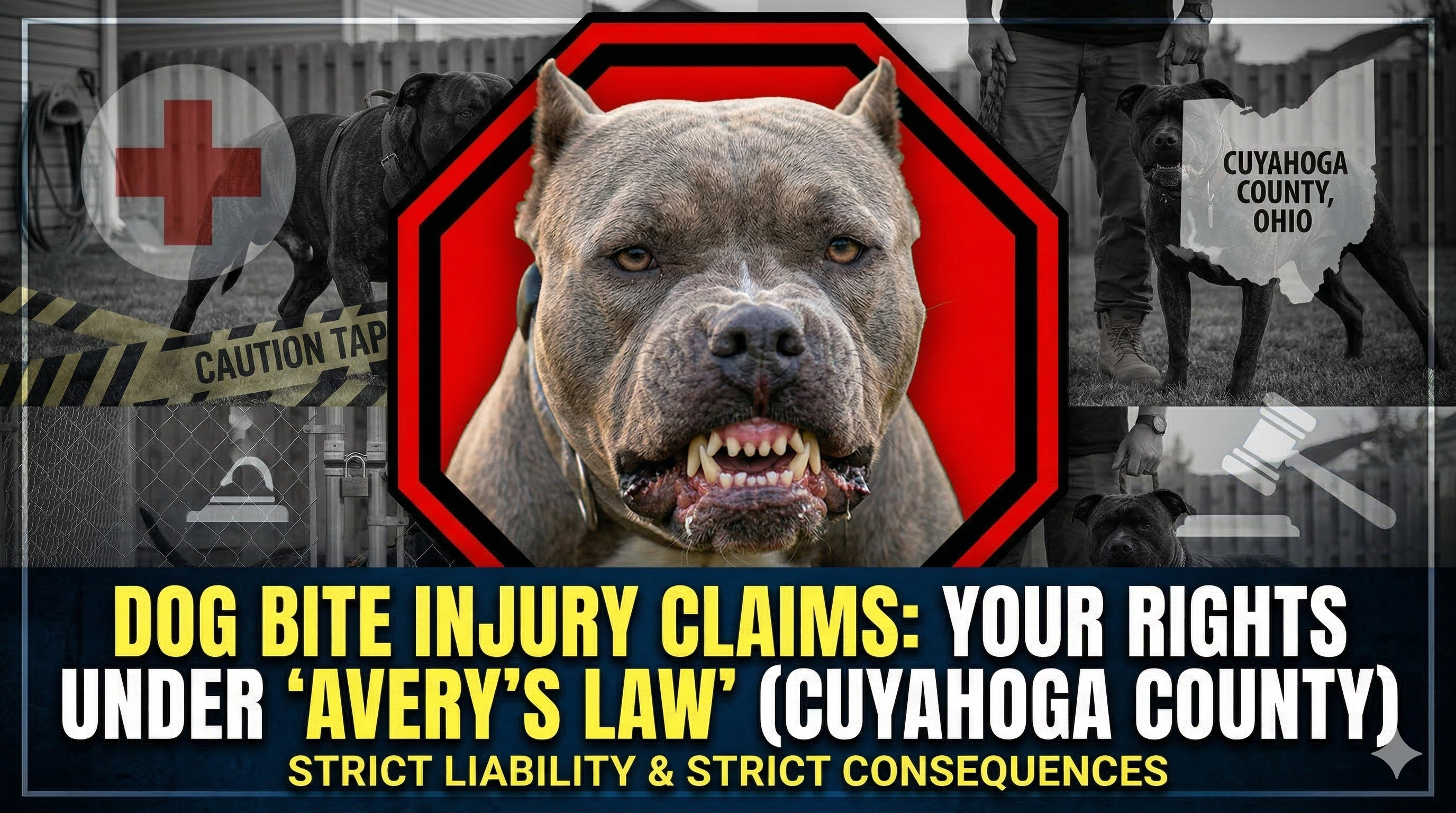
On March 18, 2026, Ohio's most significant overhaul of dangerous dog law in decades takes effect. House Bill 247 — signed by Governor Mike DeWine in December 2025 and named Avery's Law in honor of Avery Russell — rewrites large sections of R.C. Chapter 955, the statute that governs dog ownership, dangerous dog designations, and the consequences when a dog injures or kills someone.
For dog bite victims in Cuyahoga County, the new law has real consequences — both for the criminal accountability of negligent owners and for the civil claims that injured victims and their families pursue for compensation. This article breaks down what changed, what stayed the same, and what it means for your rights if you are attacked.
The Story Behind the Law
In June 2024, 11-year-old Avery Russell was at a friend's house in Reynoldsburg, Ohio when two American Bully XL dogs attacked her in the backyard. The dogs chewed off most of her ears, tore at her face and neck, and left her in a coma. She has since undergone seven surgeries. Nerve damage left her initially unable to smile.
The owner of those dogs received four days in jail and a $450 fine for failure to confine the animals and failure to license them. Both dogs had a prior history of aggression. Under Ohio law at the time, that history did not require the owner to face more serious consequences — and it did not require the dogs to be removed.
That outcome became the central argument for reform. Avery Russell testified before the Ohio Legislature in person, telling the House Committee, "I truly thought I was going to die." She and her mother, Drew Russell, pushed for a law that would make negligent owners face real consequences before — and after — a catastrophic attack.
House Bill 247 passed the Ohio House in June 2025 and was unanimously approved by the Ohio Senate in November 2025. The Governor signed it in December 2025.
What Avery's Law Actually Changes
1. Criminal Penalties for Negligent Owners — Substantially Increased
Under prior Ohio law, the minimum jail time for owners whose dogs attacked was 30 days. Avery's Law raises that minimum to six months.
More significantly, the law now imposes criminal penalties on any owner who negligently fails to prevent an unprovoked attack — including first-time attacks. An owner of a repeat-offending vicious dog can now be charged with a felony, carrying up to a $10,000 fine and three years in prison. This is a fundamental shift from the prior framework, which often required multiple serious incidents before felony exposure arose.
The law also clarifies that certain violations — including failure to register a dog with the county auditor — are strict liability offenses, meaning the prosecution does not need to prove intent.
2. Immediate Seizure Authority for Dog Wardens
Previously, dog wardens in Cuyahoga County and across Ohio faced procedural delays before they could seize a dangerous animal following an attack. Avery's Law gives dog wardens authority to seize a dog immediately following an unprovoked attack, without waiting for a court order to initiate the process.
A hearing must still be held within 10 days of seizure so a judge can determine next steps — due process remains intact — but the lag time between attack and removal of the animal from the community is eliminated in the most serious cases.
For Cuyahoga County, the Cuyahoga County Animal Shelter (CCAS) at 9500 Sweet Valley Drive in Valley View handles impoundment for most county municipalities. Dog wardens across the county's 59 cities and villages now have clearer and faster authority to act.
3. Mandatory Euthanasia After Serious Injury or Death
This is one of the most significant changes in the law. Under prior Ohio law, euthanasia was generally only mandatory after a dog killed a second person. A dog that killed or seriously injured one person — as happened to Avery Russell — could potentially remain with its owner or be rehomed.
Avery's Law eliminates that gap. If a dog kills or seriously injures a person in an unprovoked attack, courts are now required to order humane euthanasia after due process. The "one free kill" problem that legislators and advocates had identified in the old statute is gone.
The law provides important exemptions: dogs that injure someone who was trespassing, abusing the dog, or acting as an intruder are not subject to mandatory euthanasia. Dogs defending their owners or acting in a playful, nonaggressive, or age-appropriate manner are also exempt.
4. Stronger Confinement and Insurance Requirements
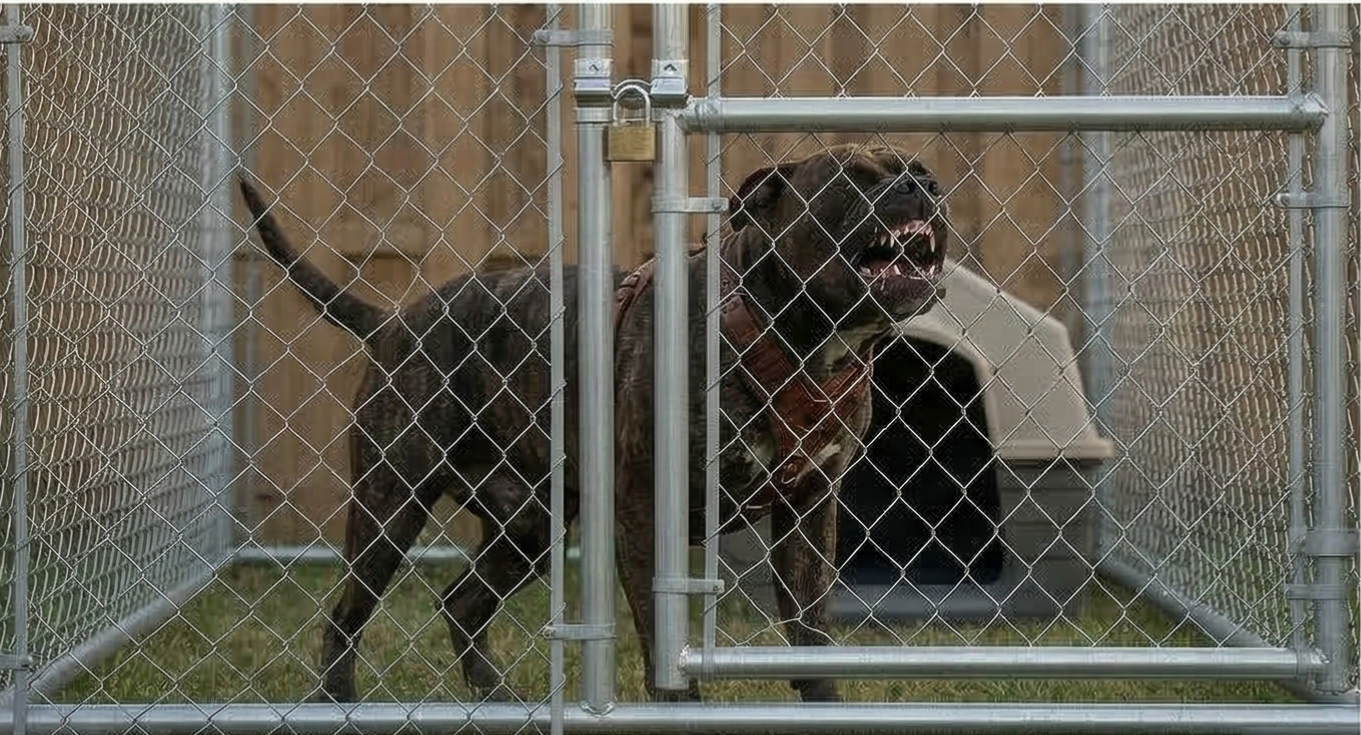
Owners of dogs designated as dangerous or vicious must now keep the dog in a yard with a locked fence specifically constructed to prevent escape — tighter than prior law, which simply required a "locked fenced yard." Dogs must also be locked up when an invitee is on the property.
The $100,000 liability insurance requirement for dangerous and vicious dog owners remains in place. The annual registration fee for dangerous dog owners doubles from $50 to $100 per year.
5. Revised Investigation and Enforcement Procedures
Avery's Law rewrites the investigation and enforcement requirements that apply when an authority receives a complaint about a potential Dog Law violation. The new framework is intended to close gaps that previously allowed aggressive dogs and negligent owners to avoid designation — particularly where prior bite history existed but had not been formally escalated.
6. Protections for Dogs Acting in Defense
The law expressly protects dogs that bite or injure someone who was abusing them, who was trespassing, or who was attacking the dog's owner. The "without provocation" standard was clarified and strengthened in the new version of R.C. § 955.22.
What Avery's Law Does NOT Change: Your Civil Rights Under R.C. § 955.28
The most important thing for Cuyahoga County dog bite victims to understand is this: Avery's Law strengthens criminal enforcement, but it does not replace or reduce your civil rights.
Ohio's strict liability dog bite statute — R.C. § 955.28 — remains in full effect and unchanged. Under that statute, the owner, keeper, or harborer of a dog is liable in damages for any injury, death, or loss caused by the dog. The victim does not need to prove prior viciousness. The victim does not need to prove the owner knew the dog was dangerous. As long as the victim was not trespassing and was not provoking the dog, liability attaches.
Avery's Law actually strengthens civil claims in an indirect but important way: the expanded criminal framework creates more official records. A dog warden's seizure file, a criminal citation for failure to confine, a prior complaint record that was now required to be investigated — all of these become evidence in a civil case.
Civil compensation can include:
- Emergency medical treatment and hospitalization
- Surgeries, reconstructive procedures, and follow-up care
- Permanent scarring and disfigurement
- Nerve damage and loss of function
- Psychological injury, anxiety, and PTSD
- Lost wages and lost earning capacity
- Pain and suffering
What This Means for Cuyahoga County Specifically
Cuyahoga County has 59 incorporated municipalities. The Cuyahoga County Animal Shelter serves as the county's primary impound facility, and county dog wardens now have expanded authority to act quickly after an attack — whether the incident occurs in Cleveland, Parma, Lakewood, Euclid, or any of the county's smaller cities and villages.
Several Cuyahoga County cities already have breed-specific ordinances or enhanced dangerous dog regulations that go beyond state law. Avery's Law sets a new statewide floor — but these local ordinances remain in force on top of it, and local ordinance violations continue to create negligence per se claims that strengthen a civil case under R.C. § 955.28.
The $100,000 Insurance Requirement and Its Civil Significance
Avery's Law maintains the requirement that owners of dangerous and vicious dogs carry at least $100,000 in liability insurance per occurrence. In practice, many dog bite claims in Ohio are resolved through the dog owner's homeowner's or renter's insurance policy. Where a dog has been formally designated as dangerous or vicious and the owner failed to obtain the required insurance, that failure is itself evidence of negligence that can strengthen a civil claim.
Practical Steps If You Are Attacked After March 18, 2026
- Get immediate medical attention. Dog bites carry serious infection risk. Document every treatment from day one.
- Report the attack to police and animal control. Under Avery's Law, the dog warden now has authority and obligation to investigate. That investigation file becomes evidence in your civil case.
- Identify the dog and its owner. Prior bite history and complaint records are now more likely to exist in official files your attorney can obtain.
- Photograph injuries over time. Scarring and healing progress are components of your damages. Continue documenting for months after the attack.
- Do not give a recorded statement to the insurance company before consulting an attorney. Early settlement offers frequently undervalue serious injuries.
A Note on What Avery's Law Cannot Undo
Avery Russell lost her ears. She has had seven surgeries. She was told she would never smile again. The owner of the dogs that attacked her received four days in jail and a $450 fine.
Avery's Law cannot undo what happened to her, and it cannot undo what happens to the next victim before the criminal system has time to act. The strongest protection for dog bite victims in Ohio remains the civil justice system — the ability to hold owners, keepers, and harborers financially accountable under R.C. § 955.28 for the full measure of harm they caused.
If you or someone you love has been attacked by a dog in Cuyahoga County, contact Ryan Injury Attorneys. We have represented the injured throughout Greater Cleveland for over 50 years. There is no fee unless we recover for you.
Related Communities
Injured in a Dog Bite in the Cleveland Area?
Ohio's strict liability law means you don't have to prove the dog was dangerous before. Ryan Injury Attorneys handles dog bite cases throughout Cuyahoga County. No fee unless we recover for you.