Chagrin Falls, Ohio — Dog Bite Law
Chagrin Falls is a historic, walkable village in eastern Cuyahoga County, approximately 24 miles southeast of downtown Cleveland, with a 2020 Census population of 4,188 spread across just 2.08 square miles. The Village regulates dogs under Chapter 505 (Animals and Fowl) of its Codified Ordinances, which includes a local dangerous and vicious dog classification system with Police Department seizure authority, a dedicated biting-incident impoundment procedure, and an explicit court order provision authorizing permanent banishment or destruction of dogs that have attacked people without provocation. The framework goes meaningfully beyond the standard state law minimum — unlike some Chapter 505 villages in Cuyahoga County that carry only a bare leash law, Chagrin Falls has layered its own classification structure on top of Ohio's strict liability statute.
If you have been bitten by a dog in Chagrin Falls, Ohio law under R.C. § 955.28 entitles you to compensation from the dog's owner, keeper, or harborer regardless of whether the animal has ever bitten before. Chagrin Falls's homeownership rate of approximately 80% — among the higher rates in the service area — means the overwhelming majority of dog owners in this Village carry homeowner's insurance, creating a reliable insurance recovery pathway for most bite victims. The Village's affluent character and median household income of $96,914 also make umbrella policies more common than in lower-income communities.
Chagrin Falls at a Glance
No fee unless we recover — call (216) 363-6040
Chagrin Falls at a Glance
Chagrin Falls Animal Control & Local Ordinances
Chagrin Falls regulates animals under Chapter 505 (Animals and Fowl) of its Codified Ordinances. The chapter runs from §505.01 through §505.24 and includes a leash/control provision, cruelty prohibitions, a barking/nuisance section, a local dangerous and vicious dog classification framework (§505.18), a biting-incident impoundment procedure (§505.19), and court authority to permanently banish or destroy attacking animals (§505.21). Section 505.02 (Impounding) was repealed by Ord. 2005-28 and is not operative.
Section 505.01 — Animals Not Under Control
The full text of §505.01 is available at codelibrary.amlegal.com. This is the Village's core leash and at-large provision, and its language is unusually direct about the liability standard it imposes: the section explicitly states that strict criminal liability is contemplated — meaning no intent or knowledge element is required for a criminal violation. No person who owns, keeps, or is in charge of a dog may permit it to run at large or fail to hold it securely on leash anywhere within the Village. Proof that a dog was found off its owner's property or not on a leash is prima-facie evidence of a violation without further showing. A first violation is a misdemeanor of the fourth degree; each subsequent violation within three years is a misdemeanor of the third degree. For plaintiff's counsel, the "strict criminal liability" language directly parallels the strict civil liability of R.C. § 955.28 — a leash law violation at the moment of the bite is a per se negligence theory that stacks on top of the state statute with no additional proof burden.
Section 505.08 — Nuisance Conditions Prohibited
The full text of §505.08 is available at the Chapter 505 index page. This section prohibits owners from maintaining conditions that create an animal nuisance. Records of nuisance conditions associated with a particular dog — such as prior at-large citations or complaints about aggressive behavior — are discoverable in any civil case and can be used to establish the owner's awareness of the dog's dangerousness before the bite occurred, supporting enhanced damages claims.
Section 505.09 — Barking or Howling Dogs
Available at the Chapter 505 index page. Barking complaints filed with Chagrin Valley Dispatch or the Police Department create an independent public record of owner notification — a history of noise complaints about a specific dog can support the argument that the owner was aware of the dog's agitated or reactive temperament before an injury occurred.
Section 505.18 — Dangerous and Vicious Dogs
The full text of §505.18 is available at codelibrary.amlegal.com. This is the centerpiece of Chagrin Falls's local dangerous dog framework. The section establishes local definitions of "dangerous" and "vicious" dogs based on specific past behavior — mirroring the structure of Ohio R.C. 955.11 but operative as an independent local classification. Key operative requirements include:
Confinement on premises: No person owning, harboring, or controlling a dangerous or vicious dog may permit the animal to go unconfined on their property.
Off-premises restraint: Off the owner's premises, a dangerous or vicious dog must be secured on a chain no longer than three feet and must be under the control of a person 18 years of age or older.
Police seizure authority: If a dangerous or vicious dog aggressively bites any person or domestic animal, the Police Department has authority — though not a mandatory duty — to seize the dog and impound it at a kennel designated by the Chief of Police. An officer may demand immediate surrender of the dog. The owner bears all boarding and lodging costs. The dog remains impounded until the court issues a final determination or the owner proves compliance with the chapter and pays costs. This seizure authority means that a biting incident in Chagrin Falls can — and should — generate an official impoundment file, a seizure record, and a cost ledger, all of which are discoverable in a civil case. A victim's attorney should request all records associated with this impoundment authority in discovery.
Because §505.18 operates as a local classification system layered on top of state law, a dog that was classified as "dangerous" or "vicious" under this section before it bit your client has already been officially adjudicated as dangerous by the Village — eliminating any defense that the owner lacked notice of the animal's propensity.
Section 505.19 — Impoundment of Dogs Involved in Biting and Attacking Incidents
The full text of §505.19 is available at codelibrary.amlegal.com. This section creates a second, independent impoundment track specifically for biting and attacking incidents, separate from the §505.18 classification-based impoundment. Under §505.19, the Chief of Police may issue an impoundment order following a biting or attacking incident. Key procedural points:
Appeal rights and notice: The dog owner may appeal a Chief of Police impoundment order to the Bedford Municipal Court under the procedures of §505.23. The appeal must be scheduled within five working days. Critically, the section expressly requires notice to be given to the bite victim, to the parents or guardians of any minor victim, and to the owner of any domestic animal that was attacked. This notice requirement means bite victims have a formal right to appear at the impoundment hearing — an opportunity to create a record and register the full scope of the injury.
Boarding costs: The owner bears boarding and lodging costs unless the dog is released. A cost ledger exists in every §505.19 impoundment — request it in discovery.
The combination of §505.18 and §505.19 means a serious biting incident in Chagrin Falls can generate: (1) a police incident report, (2) a §505.18 dangerous dog impoundment file with seizure authority documentation, (3) a §505.19 Chief of Police order file, and (4) a Bedford Municipal Court appeal record. This layered documentation creates a stronger paper trail than exists in villages with only a bare leash law.
Section 505.21 — Court Order to Remove or Destroy Animal
The full text of §505.21 is available at codelibrary.amlegal.com. In addition to any criminal penalty, the court may order that an animal be destroyed or permanently banished from the Village if it has, on one or more occasions, bitten or attacked any person or domestic animal without provocation, or if the owner has habitually permitted the animal to run at large. This court-ordered banishment or destruction authority is separate from the state R.C. 955.22 vicious dog procedure. A prior court order banishing or ordering an animal destroyed is powerful evidence in any subsequent civil case involving that animal. Victims or their attorneys should search Bedford Municipal Court records for prior orders under this section when investigating a dog's history.
Breed-Specific Legislation — Absent in Chagrin Falls
Chagrin Falls has no breed-specific legislation. The §505.18 dangerous/vicious dog classification is behavior-based and breed-neutral, consistent with Ohio's 2012 elimination of state-level BSL. Victims of bites from any breed, including pit bulls and other breeds subject to bans in neighboring communities, rely on R.C. § 955.28 and the local classification framework on equal footing. This contrasts with Warrensville Heights — also in the Bedford Municipal Court jurisdiction — which maintains an active pit bull ban under §505.20 enacted in 1987, and with North Olmsted, which classifies pit bulls and several other breeds as vicious by breed under §505.16 with mandatory $100,000 insurance requirements.
Ohio Strict Liability — R.C. § 955.28
Ohio's strict liability statute — R.C. § 955.28 — is the primary basis for dog bite claims in Chagrin Falls. The owner, keeper, or harborer of a dog is liable for injury, death, or loss caused by that dog without any requirement to prove prior dangerous propensity. Chagrin Falls's local Chapter 505 framework supplements state law with independent local theories, a documentation infrastructure, and a community profile that supports strong damages claims. For a complete explanation of the statute, defenses, and damages framework, see our complete guide to Ohio dog bite law.
§505.01's Strict Criminal Liability and Negligence Per Se Stacking
Chagrin Falls's leash law under §505.01 explicitly designates the failure to control or leash a dog as a matter of strict criminal liability — a standard that directly mirrors the strict civil liability of R.C. § 955.28. When a dog bites a person while off-leash or at large in Chagrin Falls, the owner has simultaneously (1) violated R.C. § 955.28 (strict civil liability), and (2) violated §505.01 (negligence per se, no intent required). Each is an independent basis for recovery. The leash-violation theory is particularly valuable in cases where the defendant raises provocation or contributory negligence defenses: an owner who let the dog run at large was already in violation before the bite occurred, making the provocation defense harder to sustain as the sole basis for reducing damages.
The Local Classification and Impoundment System as Evidence
The layered documentation system created by §§505.18 and 505.19 is one of the most plaintiff-favorable features of Chagrin Falls's ordinance framework. If the dog has previously been classified as dangerous or vicious under §505.18, that official Village classification is a judicial admission of dangerousness — the owner cannot credibly claim ignorance. The §505.19 impoundment file, Chief of Police order, and any Bedford Municipal Court appeal record are all discoverable documents. A victim's attorney should file public records requests with the Chagrin Falls Police Department and the Bedford Municipal Court for all records involving the dog, including any impoundment files, hearing notices, and cost ledgers. These documents build the damages narrative and defeat any "we had no idea the dog was dangerous" defense.
High Homeownership and Insurance Recovery in an Affluent Village
With approximately 80% of occupied housing units owner-occupied and a median household income of $96,914, Chagrin Falls presents one of the stronger insurance recovery environments in the service area. Homeowner's insurance typically covers dog bite liability at $100,000 to $300,000 per occurrence, and umbrella policies extending to $1 million or more are meaningfully more common in high-income communities like Chagrin Falls than in lower-income areas. The village's 20% renter population is not negligible — harborer liability under R.C. § 955.28 may apply where a landlord knew of a tenant's aggressive dog — but the dominant scenario in Chagrin Falls is an owner-occupied household with active homeowner's coverage. This insurance landscape makes Chagrin Falls claims more reliably collectible than in communities with higher rental rates or lower incomes.
Aging Population and Injury Severity
Chagrin Falls has a median age of 50.5 — among the highest of any municipality in the service area — with roughly 25% of the population 65 years of age or older. Older bite victims sustain more serious injuries for several physiological reasons: skin is thinner and tears more easily, healing is slower, wound infections are more common, and recovery typically requires more medical intervention including surgery, physical therapy, and longer hospital stays. These factors translate directly to higher medical expense damages and greater pain and suffering awards. A dog bite that produces moderate soft-tissue injury in a younger adult may require reconstructive surgery in a 70-year-old. Attorneys presenting Chagrin Falls bite claims should develop detailed medical expert testimony on age-specific injury sequelae early in the case.
Walkable Village Core and High Pedestrian Encounter Risk
Chagrin Falls is one of the most walkable communities in greater Cleveland, built around a compact historic downtown, the Triangle Park area at the center of the village, and the Chagrin River corridor running through the village center. The downtown commercial district, the River Walk and falls overlook area, and the trail networks along the Chagrin River are heavily used by pedestrians, joggers, cyclists, and dog walkers year-round. These high-traffic pedestrian zones produce a disproportionate share of off-leash or inadequately controlled dog encounters because owners frequently walk dogs through downtown areas without leashes, or encounter other dogs and pedestrians at close range. A bite occurring in the downtown area or along the River Walk is highly likely to involve a §505.01 leash violation — the dog was either off-leash in a public space or the owner failed to maintain adequate control during a pedestrian encounter.
No Dedicated Animal Control Officer: Documentation Strategy
Chagrin Falls has no dedicated Animal Control Officer. All animal-related calls are handled by Chagrin Falls patrol officers through the Chagrin Valley Dispatch Center at (440) 247-7321. The absence of a dedicated ACO means there is no separate animal warden citation log or warden report file distinct from police incident reports — unlike cities such as Lyndhurst, where the Animal Warden generates independent citation records. In Chagrin Falls, all pre-bite documentation (prior at-large calls, prior bite reports, complaints about aggressive behavior) will be found exclusively in police incident reports and dispatch call logs. Victims should submit public records requests to the Chagrin Falls Police Department for all calls and reports involving the dog's address and owner going back several years. The Cuyahoga County Board of Health at (216) 201-2001 should also be contacted to obtain any county-level bite quarantine records for the animal.
“The owner, keeper, or harborer of a dog is liable in damages for any injury, death, or loss to person or property that is caused by the dog, unless the person was trespassing or committing a criminal offense on the property of the owner, keeper, or harborer, or was teasing, tormenting, or abusing the dog.”— Ohio Revised Code § 955.28(B)
Venue & Court Information
Bedford Municipal Court
Dog bite cases arising in Chagrin Falls are filed at the Bedford Municipal Court, located at 165 Center Road, Bedford, Ohio 44146; (440) 232-3420. The court is served by Judge Nicholas A. Papa and Judge Michelle L. Paris, with Thomas E. Day, Jr. as Clerk of Court. Hours are Monday through Friday, 8:30 a.m. to 4:30 p.m.
The Bedford Municipal Court has jurisdiction over 14 communities: the Cities of Bedford, Bedford Heights, Solon, and Warrensville Heights; the Villages of Bentleyville, Chagrin Falls, Glenwillow, Highland Hills, Moreland Hills, North Randall, Oakwood, Orange, and Woodmere; and Chagrin Falls Township and Warrensville Township. The court hears civil claims up to $15,000 and operates a small claims division for claims up to $6,000. Chagrin Falls is the only village in the service area with its own Mayor's Court at Village Hall — initial ordinance violations may be handled there before contested matters are transferred to Bedford Municipal Court, making Village Hall records a separate source of documentation.
Dog bite cases involving serious injuries with damages exceeding $15,000 should be filed in the Cuyahoga County Court of Common Pleas, 1200 Ontario Street, Cleveland, OH 44113, which has no damages cap. Most dog bite cases involving surgical repair, significant scarring, prolonged treatment, or lost wages will exceed the municipal court threshold.
Statute of Limitations
Strict liability claims under R.C. § 955.28 must be filed within six years of the date of the bite. Negligence claims must be filed within two years. If the victim was a minor at the time of the bite, the statute of limitations does not begin to run until the child turns 18 — a significant extension that can make claims by young bite victims viable many years after the incident. Do not wait: evidence preservation, witness availability, and insurance policy documentation all deteriorate over time regardless of the legal deadline. For a complete explanation of filing deadlines, damages, and how to pursue a claim, see our Ohio dog bite law guide.
Local Risk Factors in Chagrin Falls
Walkable Village Core and the Chagrin River Corridor
Chagrin Falls is one of the most pedestrian-oriented communities in greater Cleveland. The historic downtown centered on Triangle Park, the commercial corridor along West and East Washington Streets, the River Walk leading to the falls overlook, and the trail networks along the Chagrin River are all high-traffic areas used daily by residents, visitors, and dog owners. The Village's compact 2.08-square-mile footprint means that virtually every neighborhood is within easy walking distance of these pedestrian zones. Leash violations are common in areas where owners walk dogs through downtown or along the riverfront, and the concentrated pedestrian density means that an off-leash dog encounter can involve multiple people in rapid succession. A bite occurring along the River Walk, in Triangle Park, or on any sidewalk in the downtown corridor is likely to involve a §505.01 leash violation at the moment of the incident.
Population and Density
Chagrin Falls had a 2020 Census population of 4,188 within a land area of 2.08 square miles, producing a population density of approximately 2,012 people per square mile. This density is moderate — higher than rural communities but lower than the densely built inner-ring suburbs. The density is concentrated along the village core near the falls and the historic downtown, while the outer residential areas are more spacious. The compact core creates more regular dog-pedestrian encounters than the density figure alone might suggest, because that core is where the majority of walking activity — both by residents and by visitors to the popular downtown area — is concentrated.
Aging Population and Vulnerable Residents
Chagrin Falls has a median age of 50.5, with approximately 25% of the population aged 65 and older. This aging profile has direct significance for dog bite injury severity. Older residents are more vulnerable to serious injury from dog attacks: the skin of elderly victims tears more easily and heals more slowly, deep bite wounds are more prone to infection and surgical complication, and recovery from soft-tissue injuries often requires intensive physical therapy and extended medical supervision. A bite that produces moderate injury in a younger person may require reconstructive surgery, wound care management, and months of rehabilitation in a victim over 70. In Chagrin Falls, a substantial fraction of the population walking downtown and along the Chagrin River every day falls into this higher-vulnerability age group. Attorneys handling Chagrin Falls claims should consult geriatric medicine specialists when documenting injury severity for older victims.
Reporting a Dog Bite in Chagrin Falls
Dog bite victims in Chagrin Falls should call the Chagrin Falls Police Department dispatch at (440) 247-7321 immediately following the incident. Emergency situations should be reported by calling 911. The Chagrin Falls Police Department, located at 21 W. Washington Street, handles all animal control calls — there is no dedicated Animal Control Officer, so the responding patrol officer will take the report and can initiate impoundment proceedings under §505.19 if a biting or attacking incident warrants it. Victims should also report the bite to the Cuyahoga County Board of Health at (216) 201-2001, which maintains independent bite quarantine records. Request a copy of the police incident report and any impoundment order from the Police Department, and submit a public records request for all prior calls involving the dog's address or owner. Photograph all injuries before treatment if safely possible, preserve any torn clothing, and obtain witness contact information.
Frequently Asked Questions — Chagrin Falls
Related Articles & News
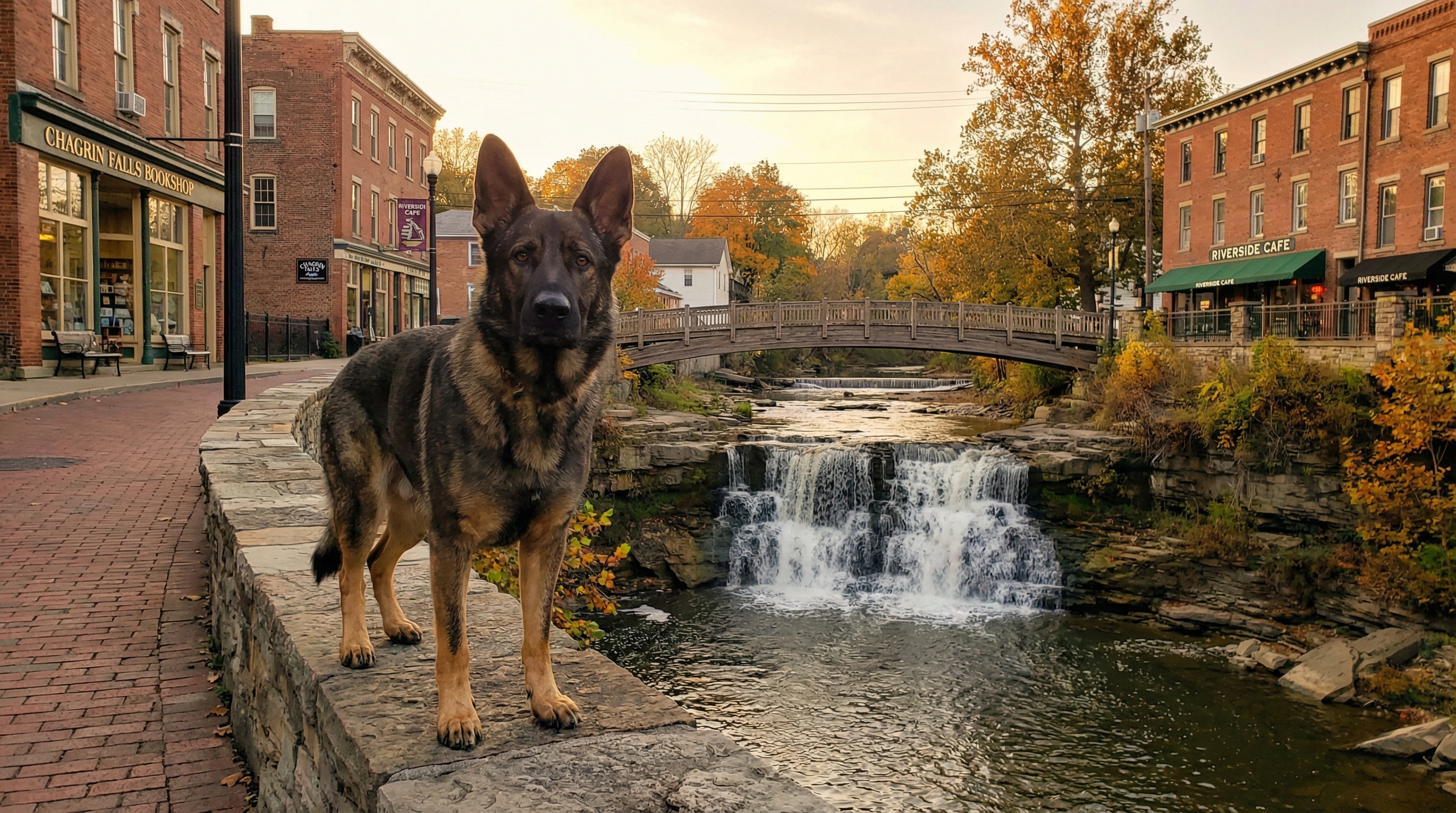
Dog Bite in Chagrin Falls Ohio: What Victims Should Know
If you or a loved one were bitten by a dog in Chagrin Falls, Ohio, understanding your rights under state law is the first step toward recovery.
Read article →
Avery's Law Is Now in Effect: What Ohio's New Dog Attack Law Means for Cuyahoga County Victims
Ohio's most significant overhaul of dangerous dog law in decades takes effect March 18, 2026. Here is what Avery's Law changes, what it does not change, and what it means if you or someone you love is attacked by a dog in Cuyahoga County.
Read article →About This Resource
This site provides educational analysis of Ohio dog bite law under R.C. § 955.28 for residents of Chagrin Falls and Cuyahoga County. It is not a law firm and does not provide legal advice.
For legal representation, this resource is operated in association with Ryan Injury Attorneys, a personal injury law firm licensed in Ohio.