Brooklyn, Ohio — Dog Bite Law
Brooklyn, Ohio classifies pit bull terriers as vicious dogs by default — the strongest breed-specific classification available under municipal law. If you have been bitten by a dog in Brooklyn, Ohio's strict liability law under R.C. § 955.28 entitles you to compensation from the dog's owner, keeper, or harborer regardless of whether the animal has ever shown aggression before.
Brooklyn's local ordinances provide powerful additional grounds for recovery beyond state law. The city's classification of pit bulls as vicious triggers mandatory confinement in locked enclosures, muzzling when off-premises, and strict control requirements — any violation of which supports a negligence per se claim that opens the door to punitive damages not available under strict liability alone.
Brooklyn at a Glance
No fee unless we recover — call (216) 363-6040
Brooklyn at a Glance
Brooklyn Animal Control & Local Ordinances
Brooklyn regulates animals under Chapter 505 of its Codified Ordinances. The primary dog bite provision is Section 505.24 (Dangerous and Vicious Dogs), which establishes both behavioral and breed-specific classifications. Brooklyn updated this ordinance as recently as June 2025 (Ord. 2025-11), confirming the city's commitment to its breed-specific framework.
Pit Bulls Classified as Vicious
Section 505.24 defines a "vicious dog" as any dog that without provocation has killed or caused serious injury to a person, has caused injury to a person or killed another domestic animal — or is a pit bull terrier. Ownership, keeping, or harboring of a pit bull constitutes prima facie evidence of owning a vicious dog. This is the most aggressive breed-specific classification in the Cuyahoga County area — stronger than Brook Park, which classifies pit bulls as merely "dangerous," and equivalent to Broadview Heights's vicious-by-default approach.
Brooklyn defines "pit bull terrier" broadly to include any American Pit Bull Terrier, Bull Terrier, Staffordshire Bull Terrier, or American Staffordshire Terrier, as well as any mixed breed identifiable as partially of those breeds. This broad mixed-breed language means the classification reaches well beyond purebred dogs — any dog with visible pit bull characteristics can fall within its scope.
Vicious Dog Confinement Requirements
Once classified as vicious, the control requirements under Section 505.24 are severe. On the owner's premises, a vicious dog must be securely confined at all times in a building, a locked pen with a top, a locked fenced yard, or another locked enclosure with a top. Off premises, the dog must be kept in an enclosed vehicle controlled by a suitable person, or on a chain-link leash no more than six feet long and muzzled. Every one of these requirements is an independent legal obligation — and the failure to meet any single one constitutes an ordinance violation that supports a negligence per se claim in a bite case.
Dangerous Dog Classification
Separate from the breed-specific vicious classification, Section 505.24 also defines a "dangerous dog" as one that without provocation has caused injury (other than killing or serious injury) to a person. This behavioral classification applies to any breed. A dangerous dog must be confined in a locked enclosure with a top or tied with a leash or tether on the owner's premises, and must be on a chain-link leash of no more than six feet and muzzled when off premises. While the restrictions are slightly less severe than for vicious dogs — dangerous dogs may be tethered rather than locked — the off-premises muzzling and leash requirements are the same.
Animals Running at Large — Leash Requirements
Section 505.10 requires that any dog on a public street or ground within the city be accompanied by a responsible person and on a leash sufficient to prevent the dog from entering private property or chasing or attacking any person, animal, or vehicle. Any dog not properly leashed is considered "at large" and in violation of the ordinance. Brooklyn also regulates invisible fencing: any land enclosed with invisible fencing must have its boundary no less than six feet from public property — a provision designed to prevent electronic-fence dogs from reaching pedestrians on the sidewalk. A violation of Section 505.10 at the time of a bite is a straightforward negligence per se argument regardless of breed.
Dog Park Restrictions
Section 505.30 specifically prohibits any dog deemed dangerous or vicious by any governmental jurisdiction from entering a dog park. If a pit bull — classified as vicious under Brooklyn's own ordinance — is brought to a city dog park and bites someone, the owner has violated Section 505.30 in addition to any other applicable confinement provisions, creating yet another independent basis for negligence per se.
Comparison with Neighboring Cities
Brooklyn's pit-bull-as-vicious approach is among the strictest in Cuyahoga County. Parma bans pit bulls outright under Ordinance 618.09 — owning one is illegal. Brooklyn and Broadview Heights both classify them as vicious by default, triggering the most demanding confinement and control requirements. Brook Park classifies pit bulls, presa canarios, and American bulldogs as "dangerous" — one tier below vicious. Cities like Cleveland, Bay Village, and Berea have no breed-specific restrictions at all. Brooklyn is bordered on three sides by Cleveland, which has no BSL — meaning a dog that is unrestricted in Cleveland becomes vicious by classification the moment it crosses into Brooklyn.
Ohio Strict Liability — R.C. § 955.28
Ohio's strict liability statute — R.C. § 955.28 — is the foundation of every dog bite claim in Brooklyn. The owner, keeper, or harborer of a dog is liable for any injury the dog causes, regardless of whether the dog has ever bitten anyone before or shown aggressive tendencies. For a full explanation of the statute, defenses, and damages, see our complete guide to Ohio dog bite law.
Brooklyn's vicious dog ordinance creates especially powerful interactions with state law for bite victims.
Automatic Negligence Per Se for Pit Bulls
When a pit bull bites someone in Brooklyn, the owner faces both strict liability under R.C. § 955.28 and a strong negligence per se claim under the municipal code. Because Section 505.24 classifies pit bulls as vicious by default, the owner has immediate legal obligations: locked confinement on premises, muzzling and chain-link leash off premises. Any failure to meet these requirements — the dog was in the yard without a locked enclosure, it was off-premises without a muzzle, it was on a standard leash instead of chain-link — is an ordinance violation that establishes breach of duty without the victim needing to prove what a "reasonable person" would have done. This dual-track claim matters because negligence per se opens the door to punitive damages for reckless or willful conduct that strict liability does not.
Harborer Liability in a Dense Inner-Ring Suburb
Brooklyn is a compact inner-ring suburb — roughly four square miles, 98% developed, bordered on three sides by Cleveland. The housing mix includes single-family homes, duplexes, and apartment complexes. The "harborer" definition under R.C. § 955.28 — anyone who has possession and control of the premises where the dog lives and acquiesces to its presence — reaches landlords and property managers who know about and permit dogs in their rental units. In Brooklyn's denser residential areas along Memphis Avenue and Ridge Road, a landlord who permits a tenant to keep a pit bull has acquiesced to the presence of a dog the city classifies as vicious — a fact that significantly strengthens a harborer liability claim and any parallel argument for punitive damages.
The Cleveland Border Effect
Brooklyn is unusual in that Cleveland — which has no breed-specific legislation — surrounds it on three sides. A pit bull owner living in Cleveland faces no breed-based restrictions. But if that dog crosses into Brooklyn for any reason — walking through the neighborhood, visiting a friend, passing through on a commercial errand — the vicious classification applies immediately. The owner's obligations under Brooklyn's ordinance attach based on where the dog is, not where it is registered. If the dog bites someone while in Brooklyn, the victim can argue the owner violated Section 505.24 confinement requirements even if the owner had no obligation to comply with similar rules in Cleveland.
Prior Classification as Evidence
If the dog that bit you had a prior dangerous or vicious designation under Section 505.24 — whether by breed classification or behavioral designation — this is powerful evidence in a parallel negligence claim. It establishes documented, official notice that the owner knew or should have known the dog posed a risk, and chose to continue harboring it. Combined with any confinement or muzzling violations, this supports an argument for punitive damages designed to punish reckless disregard of a known danger.
“The owner, keeper, or harborer of a dog is liable in damages for any injury, death, or loss to person or property that is caused by the dog, unless the person was trespassing or committing a criminal offense on the property of the owner, keeper, or harborer, or was teasing, tormenting, or abusing the dog.”— Ohio Revised Code § 955.28(B)
Venue & Court Information
Parma Municipal Court
Dog bite cases in Brooklyn are heard at Parma Municipal Court, located at 5555 Powers Boulevard, Parma, OH 44129 (440-887-7400). The court handles civil claims up to $15,000 and has jurisdiction over Brooklyn, Broadview Heights, Brooklyn Heights, Linndale, North Royalton, Parma, Parma Heights, and Seven Hills.
This shared jurisdiction means a single court hears dog bite cases from communities with very different ordinance frameworks. Brooklyn and Broadview Heights both classify pit bulls as vicious. Parma bans them entirely. Parma Heights, Seven Hills, and North Royalton take different approaches. An attorney familiar with these municipal variations can identify the specific ordinance violations and negligence per se arguments that apply in the city where the bite occurred — even though all these cases are heard by the same judges.
Brooklyn also operates a Mayor's Court (216-635-4255) that handles minor traffic and criminal offenses locally, but serious civil claims — including most dog bite cases — proceed through Parma Municipal Court or, if damages exceed $15,000, the Cuyahoga County Court of Common Pleas at 1 Lakeside Avenue, Cleveland, OH 44113. Most serious dog bite cases involving emergency surgery, hospitalization, permanent scarring, or significant lost wages will exceed the $15,000 municipal court limit.
Statute of Limitations
Strict liability claims under R.C. § 955.28 must be filed within six years. Negligence claims must be filed within two years. If the victim was a minor at the time of the bite, the statute of limitations does not begin to run until the child turns 18. For complete details on filing deadlines and recoverable damages, see our Ohio dog bite law guide.
Local Risk Factors in Brooklyn
Dense Inner-Ring Suburb Surrounded by Cleveland
Brooklyn is a compact city of approximately 11,000 residents in just over four square miles — bordered on three sides by Cleveland and on its southern edge by Parma. This density and proximity create a high volume of pedestrian traffic on sidewalks along Memphis Avenue, Ridge Road, Tiedeman Road, and Biddulph Road, where encounters between pedestrians and dogs are frequent. Because Cleveland has no breed-specific restrictions while Brooklyn classifies pit bulls as vicious, dogs that move freely in one jurisdiction face strict regulation in the other — and bite victims should document the exact location of the incident to establish which ordinance framework applies.
Ridge Park Square and Commercial Corridors
Brooklyn's main commercial area is anchored by Ridge Park Square and the expanding retail district along Brookpark Road, including big-box stores that generate significant foot traffic. The southwest corner of the city includes an industrial and commercial district along Clinton Road. Dog bites near commercial properties raise harborer liability questions: if a business owner or commercial property manager permits a dog on the premises — particularly a pit bull that Brooklyn classifies as vicious — they may face liability both as a harborer under R.C. § 955.28 and for acquiescing to a violation of Section 505.24's confinement requirements.
Big Creek Reservation and Outdoor Spaces
The northern section of Brooklyn includes part of the Cleveland Metroparks' Big Creek Reservation. While Metroparks land falls under its own regulations, the surrounding residential streets and access points are within Brooklyn's jurisdiction. Dog bites that occur near trail access points, along connecting sidewalks, or in city-maintained green spaces are subject to Brooklyn's leash law (Section 505.10) and vicious dog ordinance. Section 505.30 specifically prohibits dangerous or vicious dogs from city dog parks — meaning any pit bull in a Brooklyn dog park is in violation of the ordinance regardless of the individual dog's behavior.
Reporting a Dog Bite in Brooklyn
Dog bite victims in Brooklyn should file a report with the Brooklyn Police Department at 216-749-1234. Animal control services are shared with Parma Heights — contact the Animal Control Officer through the police non-emergency line. Victims should also report the bite to the Cuyahoga County Board of Health at 216-201-2001 for quarantine follow-up. Request copies of all incident reports and animal control records — these documents are critical evidence for establishing ordinance violations and the dog's history.
Frequently Asked Questions — Brooklyn
Related Articles & News
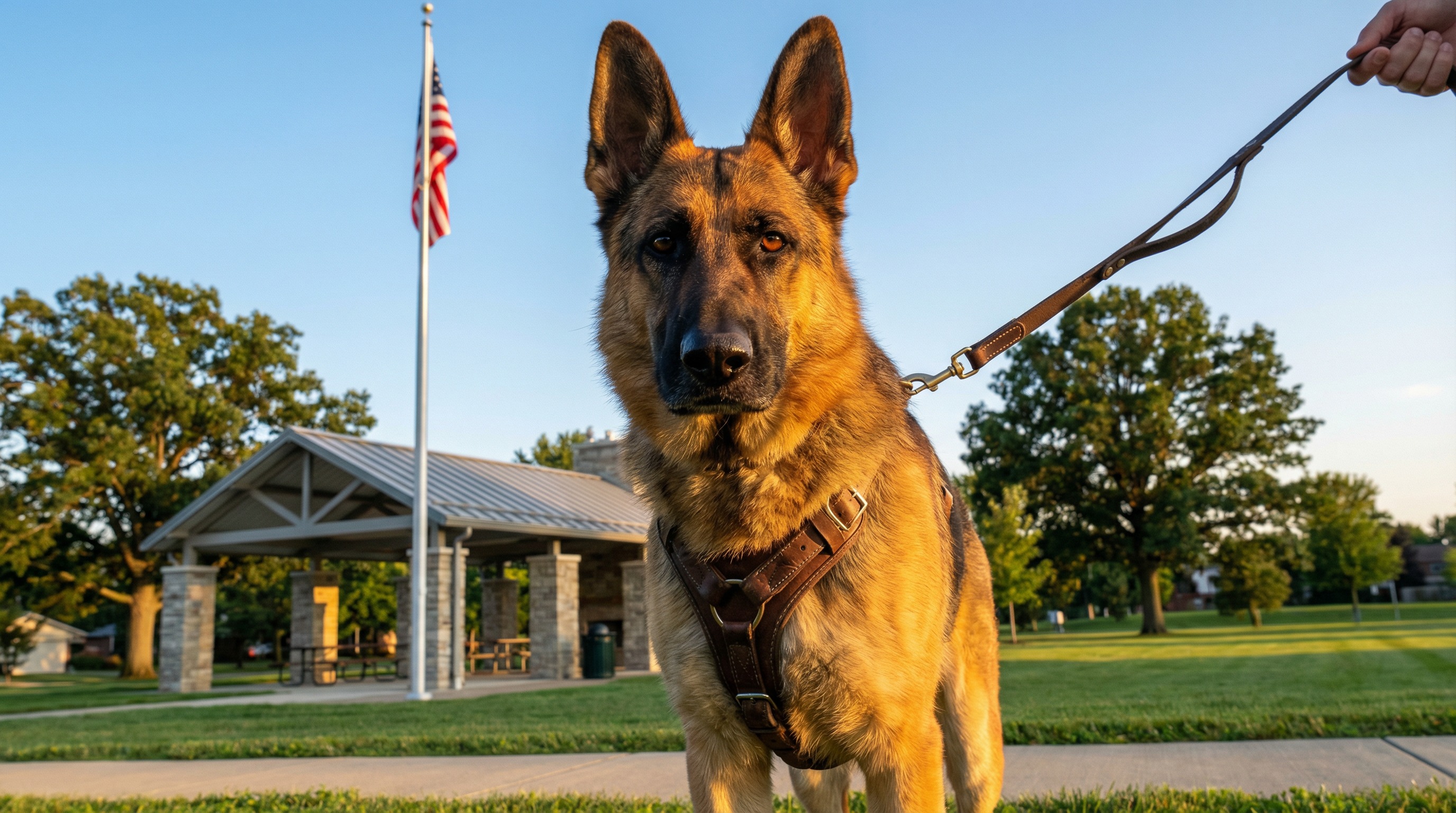
Avery's Law in Brooklyn Ohio: New Dog Bite Rules for 2026
Ohio's new Avery's Law takes effect in March 2026 with strict penalties for dangerous dog owners. Learn what these changes mean for dog bite victims in Brooklyn, Ohio.
Read article →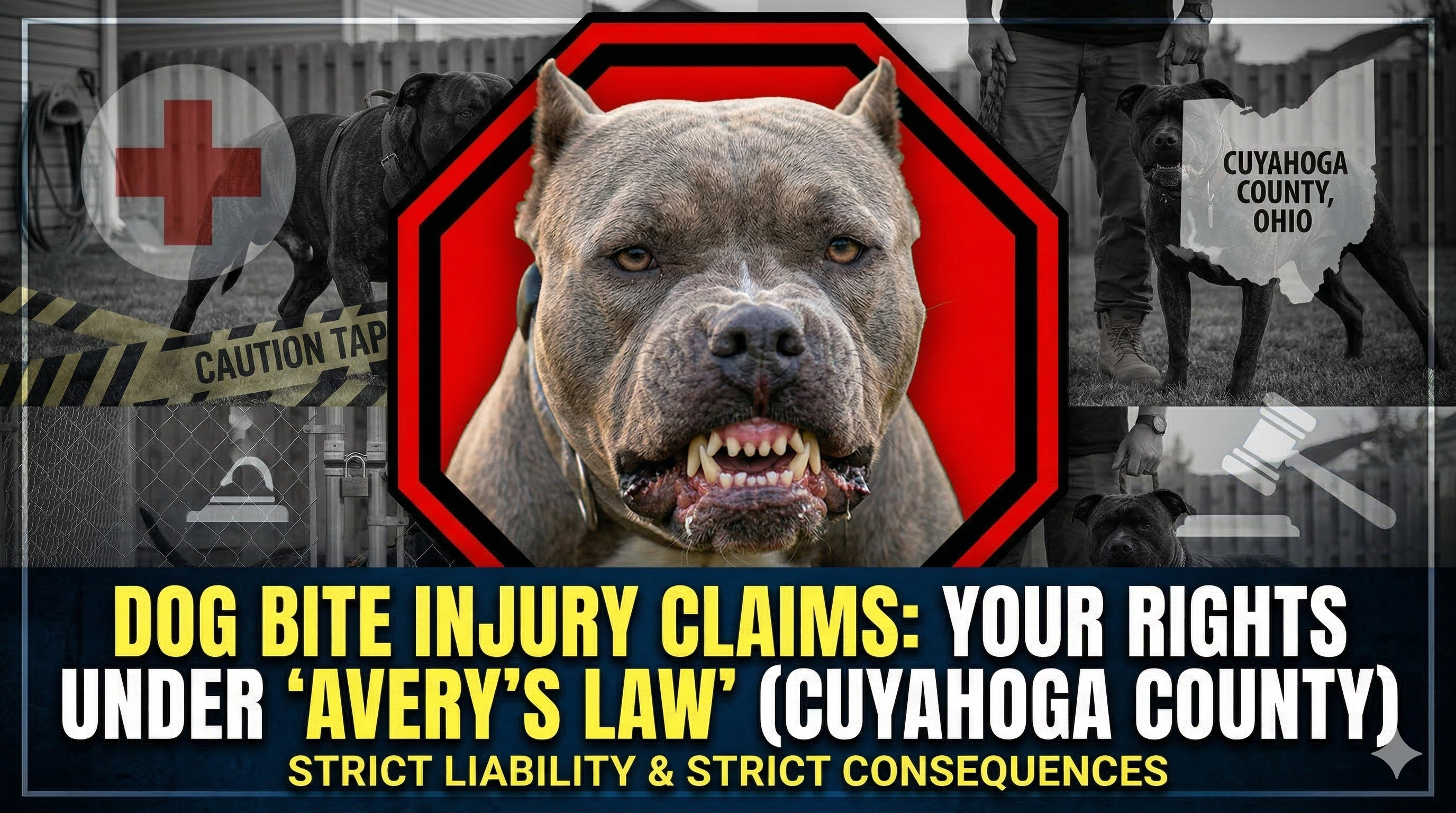
Avery's Law Is Now in Effect: What Ohio's New Dog Attack Law Means for Cuyahoga County Victims
Ohio's most significant overhaul of dangerous dog law in decades takes effect March 18, 2026. Here is what Avery's Law changes, what it does not change, and what it means if you or someone you love is attacked by a dog in Cuyahoga County.
Read article →About This Resource
This site provides educational analysis of Ohio dog bite law under R.C. § 955.28 for residents of Brooklyn and Cuyahoga County. It is not a law firm and does not provide legal advice.
For legal representation, this resource is operated in association with Ryan Injury Attorneys, a personal injury law firm licensed in Ohio.