Linndale, Ohio — Dog Bite Law
Linndale is the smallest village in Cuyahoga County — and one of the most unusual municipalities in Ohio. With a population of 108 (2020 Census), a total area of 0.08 square miles, and a history shaped almost entirely by traffic enforcement revenue, Linndale occupies a single pocket of land wholly surrounded by Cleveland and the suburb of Brooklyn. Its famous 422-yard stretch of Interstate 71 once powered the busiest per-capita Mayor's Court in the entire state before the Ohio legislature dissolved that court in 2013. Today, Linndale is a compact, predominantly renter-occupied community with a median home value of $78,900 and a homeownership rate of just 29%.
Dogs in Linndale are regulated under Chapter 505 of the Codified Ordinances of Linndale. Since 2013, all dog bite criminal charges and civil claims are heard at Parma Municipal Court — Linndale no longer operates its own Mayor's Court. Ohio's strict liability dog bite statute, R.C. § 955.28, applies in full regardless of the ordinance framework, and dog bite victims have up to six years to file a claim.
For victims in a community like Linndale, the primary practical considerations are different from wealthier suburbs: with approximately 71% of housing units renter-occupied and a median home value under $80,000, insurance coverage may be limited. But the legal rights are identical — Ohio's strict liability statute does not vary by community wealth. An attorney experienced in dog bite cases can identify available insurance coverage, assess harborer liability against landlords who knowingly permitted a dangerous dog on their property, and pursue the full range of compensatory damages.
Linndale at a Glance
No fee unless we recover — call (216) 363-6040
Linndale at a Glance
Linndale Animal Control & Local Ordinances
Linndale regulates animals under Chapter 505 (Animals and Fowl) of its Codified Ordinances, published by The Walter H. Drane Company and certified current through March 18, 2025. The chapter is confirmed in the Part Five General Offenses Code table of contents. Individual section texts were not accessible via direct fetch on the amlegal portal; the analysis below is based on the chapter's confirmed presence, the standard structure of Chapter 505 as codified across comparable Cuyahoga County villages, and cross-references confirmed in other Linndale code sections. For the complete and authoritative ordinance text, contact Village Clerk Shannon Condon at Village Hall, 4016 West 119th Street, Linndale, Ohio 44135, or visit the Linndale amlegal portal.
Chapter 505 Structure
Based on the confirmed chapter heading and Linndale's publication structure (standard Ohio municipal codification via The Walter H. Drane Company), Chapter 505 almost certainly includes prohibitions on animals running at large (§505.01), abandoning animals (§505.02), killing or injuring animals (§505.03), cruelty to animals (§505.05), nuisance conditions (§505.06 or equivalent), and barking/howling dogs (§505.07 or equivalent). Whether Linndale's Chapter 505 contains a dedicated dangerous dog section, bite reporting and quarantine section, or impounding procedure section was not confirmed. The village is small enough that a significant portion of animal control activity may operate entirely through state law rather than local augmentation.
Section 505.01 — Animals Running at Large
This section almost certainly prohibits owners, keepers, and harborers from permitting dogs to run at large on public or private property. Under standard Ohio municipal codification, running at large is prima facie evidence of a violation. A confirmed violation of § 505.01 constitutes negligence per se — breach of the duty of care as a matter of law — and supports a civil claim alongside the R.C. § 955.28 strict liability count. Attorneys relying on this section in litigation should confirm the current text with Village Hall, as Linndale's amlegal portal was certified through March 18, 2025, and the individual section text was not directly confirmed.
§ 525.15 — Police Dog Protection (Confirmed)
Section 525.15 of the Linndale Codified Ordinances, titled "Taunting, Teasing and Assaults Upon Police Dogs and Other Protected Animals Prohibited," was confirmed in the amlegal portal. While not directly applicable to dog bite victim claims, this section confirms the village's awareness of dog-related legal standards and its adoption of the standard Ohio framework for animal-related offenses.
Mayor's Court Dissolved — Parma Municipal Court Governs All Cases
One of the most important procedural facts about Linndale is that it no longer has a Mayor's Court. Ohio H.B. 5, signed by Governor Kasich on December 20, 2012 and effective March 22, 2013, dissolved Linndale's Mayor's Court — which had been the busiest per-capita Mayor's Court in the state, handling primarily I-71 speeding citations. Since March 2013, all misdemeanor criminal charges arising in Linndale, including any animal ordinance violations, are filed at Parma Municipal Court. Civil claims under R.C. § 955.28 are also filed there. This eliminates a layer of local proceedings and means Linndale bite cases proceed directly in a court with established civil jurisdiction and full procedural rules.
Breed-Specific Legislation
No breed-specific legislation was identified in Linndale. Ohio eliminated state-level breed-specific restrictions in 2012. All dog bite claims proceed under R.C. § 955.28 strict liability regardless of the dog's breed.
Ohio Strict Liability — R.C. § 955.28
Ohio's strict liability dog bite statute — R.C. § 955.28 — is the primary basis for dog bite claims in Linndale. The statute imposes liability on the dog's owner, keeper, or harborer for any injury, death, or loss caused by the dog, without any requirement to prove prior knowledge of viciousness or negligent care. The only recognized defenses are trespass, commission of a criminal offense on the owner's property, or teasing, tormenting, or abusing the animal. For a complete explanation of the statute's operation, available defenses, and the categories of recoverable damages, see our Ohio dog bite law guide.
Harborer Liability and the Renter-Majority Context
With only 29% homeownership, roughly 71% of Linndale's housing units are renter-occupied. This matters significantly for dog bite claims. When the dog owner is a tenant rather than a property owner, R.C. § 955.28's inclusion of "harborers" — any person who permits a dog to lodge or be fed regularly on their premises — creates potential liability for landlords who knew or should have known about a dangerous dog on their property. Ohio courts have held that a landlord who knowingly permits a dangerous dog to remain on a rental property, and had the ability to remove it, can qualify as a harborer for purposes of strict liability. In a community like Linndale, where the overwhelming majority of households are renters, this theory is frequently the only path to insurance recovery beyond the dog owner's limited personal assets.
Victims bitten at a rental property in Linndale should document the lease terms, identify the property owner through Cuyahoga County records, and investigate whether the landlord had prior knowledge of the dog's presence or dangerous behavior. Prior complaints to the landlord, police reports involving the dog, or neighbor testimony can establish the harborer relationship. Unlike Hunting Valley or Gates Mills, where substantial homeowners' insurance coverage is almost always available, Linndale cases may require identifying multiple liable parties — the dog owner, and potentially the landlord — to fully compensate the victim's damages.
Limited Insurance Coverage — Managing Expectations
Linndale's median home value of $78,900 is among the lowest in the Cuyahoga County communities served by this website. Renters' personal liability insurance (separate from renters' contents coverage) is not universally held, and where it exists, limits are typically modest — $100,000 is a common ceiling. Homeowners' policies on $78,900 properties carry personal liability limits that are lower than those in wealthier suburbs. This means that while the law entitles victims to full compensation, collecting that compensation requires careful pre-litigation investigation of available coverage. An attorney should: (1) submit a demand to the dog owner's renters' or homeowners' insurer; (2) identify and demand against any umbrella coverage; (3) investigate landlord liability and any applicable property owner's policy; (4) assess whether the dog owner has personal assets. For serious injuries — significant medical bills, lost wages, permanent scarring — these steps are essential to maximizing recovery.
Dangerous Dog Designation
Ohio R.C. § 955.22 requires the owner of a dog designated as "dangerous" to obtain $100,000 in liability insurance. In Linndale, where most residents rent, confirming that this insurance obligation has been met — or that it has not, which may itself be evidence of financial exposure — is a key early step in any dog bite case. A dog that has previously bitten without provocation, or that has caused a prior injury, may already be on record as a dangerous dog through the Cuyahoga County Dog Warden. Checking that database early can reveal prior incidents and existing insurance obligations.
Filing Window
Strict liability claims under R.C. § 955.28 must be filed within six years of the date of the bite. Negligence-based claims, including Chapter 505 violations, carry a two-year limitations period. If the victim was a minor, the statute does not begin to run until the child turns 18. See our Ohio dog bite law guide for full details.
“The owner, keeper, or harborer of a dog is liable in damages for any injury, death, or loss to person or property that is caused by the dog, unless the person was trespassing or committing a criminal offense on the property of the owner, keeper, or harborer, or was teasing, tormenting, or abusing the dog.”— Ohio Revised Code § 955.28(B)
Venue & Court Information
Parma Municipal Court
All dog bite criminal and civil matters arising in Linndale are heard at Parma Municipal Court, located at 5555 Powers Boulevard, Parma, OH 44129 (phone: (440) 887-7400). Parma Municipal Court serves Broadview Heights, Brooklyn, Brooklyn Heights, Linndale, North Royalton, Parma, Parma Heights, and Seven Hills. The court hears civil claims up to $15,000 and operates a Small Claims Division for claims up to $6,000. Dog bite claims exceeding $15,000 are filed in the Cuyahoga County Court of Common Pleas, which has no upper limit on civil recovery.
It is important to note that Linndale no longer operates its own Mayor's Court. Ohio H.B. 5, effective March 22, 2013, dissolved Linndale's Mayor's Court — previously the busiest per-capita Mayor's Court in Ohio due to the village's I-71 speed trap enforcement. Since March 2013, every criminal matter arising in Linndale, including animal ordinance violations, is filed at Parma Municipal Court. This means bite victims in Linndale proceed directly in a court with established civil and criminal procedure, with no local Mayor's Court step.
Statute of Limitations
Strict liability claims under R.C. § 955.28 must be filed within six years of the bite. Negligence claims carry a two-year limitations period. Minors' claims do not accrue until the child turns 18. See our Ohio dog bite law guide for full details.
Local Risk Factors in Linndale
Dense Urban Pocket — Memphis Avenue and Surrounding Streets
Linndale's 0.08 square miles is entirely surrounded by Cleveland and Brooklyn. Memphis Avenue is the village's main commercial corridor, and the village's residential streets are dense urban blocks consistent with the surrounding west-side Cleveland neighborhoods. The setting is fundamentally different from the suburban or semi-rural communities elsewhere in the Cuyahoga County service area. Dog encounters in Linndale occur in urban conditions: sidewalks, adjacent yards, shared driveways, and common areas of multi-unit rental properties. Loose dogs in this setting have immediate access to pedestrians, cyclists, and children playing outside, with limited physical separation between properties.
Multi-Unit Rental Housing and Shared Common Areas
At 71% rental occupancy, many of Linndale's residential units are in multi-family structures. Shared entryways, stairwells, and outdoor common areas create high-frequency dog-human contact zones where encounters can occur with little warning. Under Ohio's harborer theory, a landlord who permits a dangerous dog to use common areas of a rental property may have liability exposure even if the actual bite occurs on a common stairway or yard shared by all tenants. Documenting the physical layout of the property — which areas are "common" versus "private" — is an important step in establishing harborer liability against the property owner.
I-71 and Memphis Avenue Traffic
Interstate 71 runs through Linndale, and Memphis Avenue sees significant through traffic. Dogs at large in this environment face serious injury risk from vehicles, and so do people encountered by loose dogs in the roadway environment. A bite that occurs as someone is attempting to evade a loose dog near a busy road — Memphis Avenue, the I-71 on/off ramp area, or similar locations — may involve additional damages for the acute stress and danger of the encounter itself, beyond the physical bite injury.
Small Population and Anonymity Considerations
With only 108 residents, Linndale has an extremely small pool of potential dog owners. Identifying the animal and its owner after a bite incident is generally straightforward — there are few anonymous households in a village this size. Documenting the incident (photos of injuries, photos of the dog and its location, witness contact information) is important, but locating the owner is typically not the challenge it can be in larger communities.
Reporting a Dog Bite in Linndale
Dog bite victims in Linndale should call the Linndale Police Department at (216) 251-1234. For emergencies, call 911. Request a written incident report before leaving the scene. Also contact the Cuyahoga County Board of Health at (216) 201-2001 to report the bite and initiate rabies quarantine authority. If the dog is impounded, it will be held at the Cuyahoga County Animal Shelter, 9500 Sweet Valley Drive, Valley View, OH 44125. Obtain the quarantine documentation and animal identification number for use in subsequent legal proceedings.
Frequently Asked Questions — Linndale
Related Articles & News
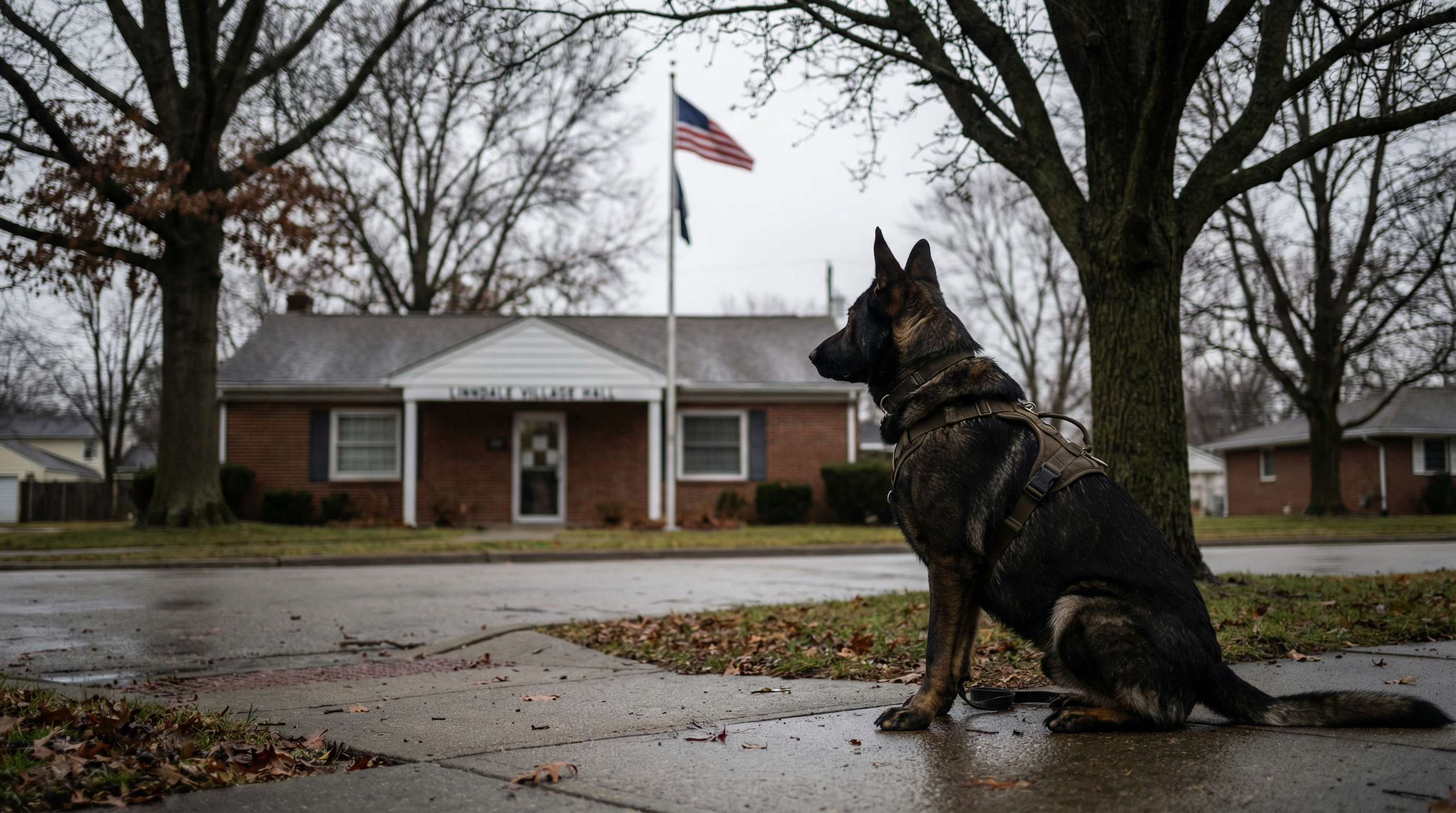
Dog Bite in Linndale Ohio: Incident Report and Legal Guide
If you or a loved one has been bitten by a dog in Linndale, Ohio, understanding your legal rights is the first step toward recovery. Learn about local ordinances and Ohio strict liability laws.
Read article →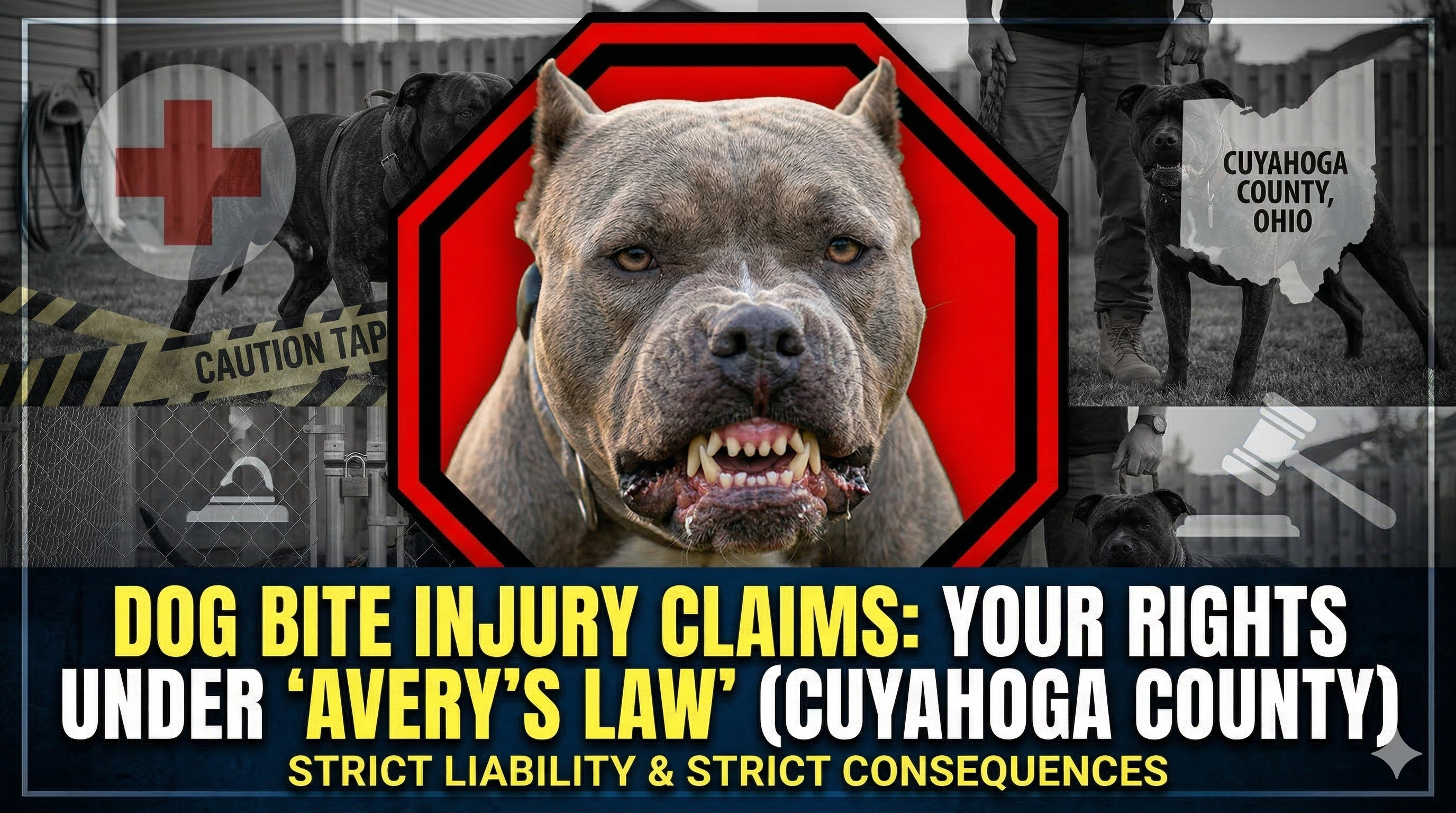
Avery's Law Is Now in Effect: What Ohio's New Dog Attack Law Means for Cuyahoga County Victims
Ohio's most significant overhaul of dangerous dog law in decades takes effect March 18, 2026. Here is what Avery's Law changes, what it does not change, and what it means if you or someone you love is attacked by a dog in Cuyahoga County.
Read article →About This Resource
This site provides educational analysis of Ohio dog bite law under R.C. § 955.28 for residents of Linndale and Cuyahoga County. It is not a law firm and does not provide legal advice.
For legal representation, this resource is operated in association with Ryan Injury Attorneys, a personal injury law firm licensed in Ohio.