South Euclid, Ohio — Dog Bite Law
South Euclid is one of the relatively few Cuyahoga County suburbs with its own municipal court, which matters in dog bite litigation because ordinance violations, quarantine disputes, and civil claims are all filtered through a court focused on the city itself. The city’s animal rules appear in Chapter 505 of the Codified Ordinances rather than Chapter 618, and South Euclid’s framework is more detailed than a bare state-law mirror: it authorizes police classification of dangerous and vicious dogs, creates a written local appeal procedure, imposes detailed tethering and confinement rules, and bars dangerous or vicious dogs from municipal parks and community gardens.
If you have been bitten by a dog in South Euclid, Ohio law under R.C. § 955.28 entitles you to compensation from the dog’s owner, keeper, or harborer regardless of whether the animal has ever bitten anyone before. South Euclid had 21,883 residents at the 2020 Census and an owner-occupied housing rate of 81.7%, which usually means a larger share of claims can be investigated through homeowner’s insurance rather than only against an uninsured individual.
South Euclid at a Glance
No fee unless we recover — call (216) 363-6040
South Euclid at a Glance
South Euclid Animal Control & Local Ordinances
South Euclid regulates dogs and other animals under Chapter 505 of its Codified Ordinances. This is not a thin framework. For dog bite cases, the most important local provisions are the dangerous/vicious-dog classification process, the appeal procedure, the detailed neglect and tethering rules, the bite-reporting and quarantine section, the nuisance sections, and the leash and park restrictions. The chapter is also useful for what it does not contain: unlike North Olmsted, South Euclid does not maintain breed-specific legislation, and unlike Garfield Heights it does not extend a $100,000 insurance mandate to dangerous dogs.
Section 505.01 — Dogs and Other Animals Running at Large; Dangerous and Vicious Dogs
Section 505.01 is the core local liability section. It defines dangerous dog and vicious dog, prohibits running at large, and allows the Chief of Police or a designee to determine dangerous or vicious status on a preponderance of the evidence. For a plaintiff, that matters because a city classification can become powerful civil evidence even when the owner argues the dog was only “protective” or “playful.”
South Euclid’s process also reaches beyond the titled dog owner. If ownership information is unavailable, written notice may be directed to the titled owner of the property where the dog is kept. That makes the ordinance unusually useful when investigating harborer liability, family-member control, or property-based responsibility. Once notice is served, the owner must comply within 30 days.
Compliance duties are substantial: dangerous or vicious dogs must be kept in a secure locked enclosure, must be controlled off-premises with leash and muzzle protections, must have a conspicuous warning sign, must be microchipped, spayed or neutered, and must complete obedience training. The owner must also provide two annual color photographs. South Euclid requires $100,000 in liability insurance for vicious dogs, but not for dangerous dogs. That is narrower than Garfield Heights and much narrower than Lakewood, which requires insurance citywide, but it still creates a direct negligence-per-se theory when a vicious dog lacks mandated coverage.
Another plaintiff-friendly detail is location control. Section 505.01 bars dangerous or vicious dogs from any municipal park or community garden. In a city with Quarry Park, Bexley Park, Oakwood Green, and multiple community gardens, that can turn a bite in a public recreation space into a straight ordinance-violation claim.
Section 505.012 — Appeal Procedure
South Euclid does not leave classification to an unreviewable administrative decision. A dog owner who receives a dangerous- or vicious-dog notice may demand a hearing within seven days, and the hearing is supposed to be held within ten days before a three-member panel appointed by the Mayor. For civil cases, this means classification disputes often generate an additional paper trail: notices, hearing demands, witness statements, and panel outcomes. That paper trail can later help prove prior notice, control, and credibility problems.
Section 505.02 — Impounding and Disposition; Records
When an animal is found in violation of Chapter 505 and is not wearing a valid tag, the Animal Warden or police may impound it. Release requires payment of impound fees and boarding costs, and unreclaimed animals are transferred to the County Animal Warden after three days. In practice, impound records can help establish the dog’s identity, prior ordinance history, and the correct owner or keeper—issues that often become disputed once an insurance claim is opened.
Sections 505.03, 505.033, 505.035, and 505.037 — Registration and Tag Enforcement
South Euclid separately requires dog registration, requires dogs to wear valid tags, prohibits interference with lawful capture of an unregistered dog, and prohibits fictitious, altered, or invalid tags. These sections matter because identification is often the first litigation problem after a bite. A dog found without a valid tag is treated as prima facie evidence of non-registration and can be impounded. When a defendant later denies ownership, these registration and tag provisions help frame the investigation and can support adverse inferences if the dog was kept off-record.
Sections 505.07, 505.071, and 505.08 — Cruelty, Neglect, and Unsanitary Conditions
South Euclid’s neglect section is unusually detailed and can be extremely useful in serious attack cases. Section 505.071 requires food, clean water, veterinary care, and adequate shelter; forbids unsanitary conditions; limits tethering to no more than three hours in a 24-hour period; bans tethering overnight, during heat advisories, and during tornado warnings; prohibits unsafe collars and entangling restraints; forbids continuous garage confinement as a dog’s primary residence; and sets minimum outdoor space requirements for fenced yards, runs, and kennels.
Those rules matter because dangerous attacks often arise from exactly these conditions—improper restraint, inadequate fencing, and poor confinement. If the bite occurred while a dog was being kept in violation of Section 505.071, the ordinance supplies a strong negligence-per-se theory independent of the state strict-liability claim. Section 505.07 also criminalizes cruelty and allows forfeiture, while Section 505.08 prohibits noxious odors and unsanitary conditions that affect health and safety.
Section 505.09 — Barking or Howling Dogs
This section does more than regulate noise. It expressly states that a person who allows a dog to remain, be lodged, or be fed in premises the person owns or occupies is considered to be harboring the dog. That wording is valuable in dog bite litigation because Ohio strict liability applies not only to owners, but also to keepers and harborers. In South Euclid, a property occupant cannot easily claim distance from the dog while still housing or feeding it on the premises.
Sections 505.10 and 505.105 — Animal Bites, Reports, Quarantine, and Rabies Vaccination
Section 505.10 requires the owner or keeper of an animal that bites a person to take the animal to a qualified veterinarian within 24 hours, permit re-examination on the tenth day, and submit the veterinarian’s written report to the Chief of Police within 24 hours after the final examination. If the dog dies before the tenth-day examination, the owner must notify the Chief immediately; the animal cannot be purposely destroyed before compliance. Section 505.105 separately requires current rabies vaccination and proof on request.
For victims, these provisions are critical. They create records, quarantine evidence, vaccination evidence, and another clear ordinance-violation theory when an owner disappears, refuses testing, or withholds veterinary documentation. They also help establish whether a defendant behaved responsibly after the bite—something insurers often scrutinize when evaluating settlement posture.
Section 505.14 — Animals Prohibited in Certain Places
South Euclid restricts animals from stores, restaurants, schools, public buildings, and designated park areas. Dogs are allowed in public parks only if they are on leash, cleaned up after, kept under control, and kept out of playgrounds, tennis courts, ball fields, the swimming pool, the splash park, and community gardens. The fenced dog park at Quarry Park North is the main exception. This section gives a plaintiff a clean local rule for incidents in playground-adjacent spaces, athletic fields, and other mixed-use public areas.
Section 505.16 — Animals in Dwellings; Abatement of Nuisance
When a complaint alleges a nuisance condition from animals kept within a dwelling, South Euclid Municipal Court must schedule a hearing and may order abatement. Failure to obey the abatement order within ten days is a criminal offense. This matters in civil cases because it creates a court-based mechanism for documenting chronic animal problems before a bite occurs. A prior nuisance complaint, hearing, or abatement order can strongly support notice and punitive-fact arguments.
Unlike Lyndhurst and Cleveland Heights, South Euclid does not impose a two-dog household limit. That means local nuisance, classification, restraint, and park-access rules—not a dog-count cap—are the stronger ordinance tools here.
Section 505.18 — Nuisance Conditions Prohibited
Section 505.18 declares animals a nuisance when they trespass, damage property, disturb the peace, or threaten public health, comfort, or safety. It also specifically treats scratching, digging, urinating, and defecating on another’s property as nuisance conduct, though prompt feces removal abates that portion of the violation. For a bite case, this section helps establish that repeated aggressive or intrusive behavior did not begin with the bite itself. It also supports witness testimony from neighbors about recurring trespass or property interference.
Section 505.19 — Muzzle or Leash for Dogs
Section 505.19 makes it unlawful for an unmuzzled dog to be on a public street or highway unless the dog is securely held on a leash by the owner or another responsible person. That is a classic negligence-per-se section. If the bite happened on a sidewalk, roadway edge, or similar public area and the dog was loose or uncontrolled, the ordinance violation substitutes for the ordinary negligence analysis.
What South Euclid does not have is also important. Section 505.20, formerly titled “Vicious Animals,” is expressly repealed, and the operative dangerous/vicious-dog rules are now consolidated in Section 505.01. The code also does not impose breed-specific restrictions, does not require universal dog liability insurance, and does not create a two-dog dwelling cap. In other words, South Euclid’s strongest local plaintiff tools are classification, confinement, tethering, bite-reporting, nuisance, and leash violations—not breed rules or household limits.
Ohio Strict Liability — R.C. § 955.28
Ohio’s strict liability statute — R.C. § 955.28 — is still the primary basis for dog bite claims in South Euclid. The statute makes the owner, keeper, or harborer liable for injury, death, or loss caused by the dog without requiring proof that the dog previously bit someone. For a full discussion of the statute, defenses, damages, and filing deadlines, see our complete guide to Ohio dog bite law. South Euclid’s local code matters because it supplies additional ordinance-based negligence claims and helps identify the correct defendants.
81.7% Owner Occupancy and the Insurance Question
South Euclid’s owner-occupied housing rate is high for an inner-ring suburb. That usually improves recovery prospects because homeowner’s insurance is more common than in renter-heavy communities. In practical terms, that means many South Euclid claims can be investigated through liability coverage rather than only by pursuing an individual defendant’s personal assets. It also means umbrella coverage is more realistic than in low-homeownership cities.
South Euclid’s Police Classification Process as Civil Evidence
Because Section 505.01 allows the Chief of Police or a designee to classify a dog as dangerous or vicious on a preponderance standard, South Euclid can generate local evidence that many suburbs do not. A police classification notice, supporting complaint, and appeal outcome can help prove prior aggressive behavior, prior notice, and the owner’s failure to comply with local safety duties. That is especially useful where the defense tries to reduce the attack to a one-time freak event.
When “Feeding” a Dog Makes Someone a Harborer
Ohio strict liability extends to a dog’s harborer, not just its titled owner. South Euclid’s barking ordinance strengthens that theory by stating that someone who allows a dog to remain, be lodged, or be fed on property the person owns or occupies is harboring the dog. That wording can matter in multigenerational households, informal roommate arrangements, or properties where a landlord or family member claims the dog “wasn’t mine” despite daily control over where it stayed.
4,696.9 People Per Square Mile: Encounters in Close Quarters
South Euclid’s density means many encounters happen on sidewalks, short front walks, shared driveways, small side yards, and closely spaced porches rather than on large setback lots. That increases the importance of leash compliance, gate conditions, and adequate confinement. In a compact city, a dog that gets loose does not have far to travel before reaching pedestrians, neighbors, delivery workers, or children moving between houses and parks.
Quarry Park, Community Gardens, and Prior-Notice Arguments
South Euclid’s park system and community gardens make Section 505.14 and Section 505.01 particularly relevant. Dogs are allowed in many park areas only if they are leashed and controlled, while dangerous or vicious dogs are barred from municipal parks and community gardens altogether. If a bite occurs in or near Quarry Park, Bexley Park, Oakwood Green, or a city garden, the ordinance can help show that the risk was specifically identified by local law before the incident ever happened.
What South Euclid Municipal Court Changes
Because South Euclid has its own municipal court, nuisance complaints, ordinance prosecutions, and lower-value civil suits are concentrated in a city-specific forum rather than being diluted across a multi-city jurisdiction. That can make it easier to trace prior filings, obtain local records, and identify whether the same dog, household, or property has appeared in earlier proceedings. Like Euclid and Lakewood, South Euclid benefits from having a court that is focused on its own ordinance environment.
“The owner, keeper, or harborer of a dog is liable in damages for any injury, death, or loss to person or property that is caused by the dog, unless the person was trespassing or committing a criminal offense on the property of the owner, keeper, or harborer, or was teasing, tormenting, or abusing the dog.”— Ohio Revised Code § 955.28(B)
Venue & Court Information
South Euclid Municipal Court
Dog bite cases arising in South Euclid are heard at the South Euclid Municipal Court, 1349 South Green Road, South Euclid, Ohio 44121. The court’s public materials identify Judge Timothy Sterkel, Chief Administrative Bailiff Taylor Jones, and Clerk of Court Evan Szirony. Telephone: (216) 381-2880.
The court’s civil jurisdiction covers South Euclid itself, the portion of the Cleveland Metroparks located within the city, and Notre Dame College property. The civil division hears claims up to $15,000, and the small claims division hears claims up to $6,000.
Dog bite cases involving surgery, permanent scarring, facial injuries, nerve damage, significant lost earnings, or long-term psychological harm will often exceed the municipal court limit and belong in Cuyahoga County Court of Common Pleas, General Division, 1200 Ontario Street, Cleveland, Ohio 44113. The Clerk of Courts also maintains offices at 1 Lakeside Avenue.
Statute of Limitations
Strict liability claims under R.C. § 955.28 are generally treated as actions on a statutory liability and must usually be filed within six years. Negligence claims for bodily injury are generally subject to a two-year limitations period. If the victim was a minor when the bite occurred, the limitations clock is tolled until the child turns 18. For a fuller discussion of deadlines, damages, and defenses, see our Ohio dog bite law guide.
Local Risk Factors in South Euclid
Quarry Park North, Dog Park, and Community Garden Conflicts
South Euclid is not just a residential grid. It has a fenced off-leash dog park at Quarry Park North, multiple community gardens, and a park system that includes Bexley Park, Quarry Park, Oakwood Green Nature Preserve, and the Euclid Creek Reservation along the city’s northern border. That matters because Chapter 505 draws careful lines about where dogs may go, where they must be leashed, and where dangerous or vicious dogs are forbidden entirely. Incidents in these spaces often produce both civilian witnesses and ordinance-based negligence claims.
Population and Density
South Euclid had 21,883 residents at the 2020 Census, covers 4.66 square miles, and has a population density of 4,696.9 people per square mile. In dog bite terms, that is a close-quarters environment: short setbacks, shared property lines, nearby sidewalks, busier intersections, and more frequent pedestrian exposure than in spread-out exurban communities. The city’s median age is about 37.3, with 21.3% of residents under 18 and 17.0% age 65 or older, so both children and older adults remain important injury-vulnerability groups.
Mayfield, Green, Monticello, and Repeated Encounter Zones
South Euclid’s business and activity nodes are concentrated around Cedar & Green, Cedar & Warrensville, the Mayfield Road corridor, Downtown South Euclid at Mayfield & Green, the medical-and-educational stretch of South Green, and the industrial area at South Green and Monticello. Those corridors matter in claims because they generate repeated contact among residents, dog walkers, delivery workers, customers, and employees. South Euclid also expressly prohibits animals on the center strips of Monticello Boulevard, Belvoir Boulevard, and Warrensville Center Road, which helps define where owners should and should not be walking animals.
An 81.7% Owner-Occupied Housing Stock
With 81.7% owner occupancy, South Euclid presents a more favorable insurance landscape than renter-dominant communities. The inverse is that only about 18.3% of occupied housing is renter-occupied, so classic absentee-landlord harborer cases may be less common here than in places with heavy rental turnover. But harborer liability still matters in owner-occupied duplexes, family compounds, and situations where one adult houses or feeds another person’s dog on the property.
Reporting a Dog Bite in South Euclid
Dog bite victims in South Euclid should promptly contact the South Euclid Division of Police at (216) 381-1234 and, when appropriate, the City’s Animal Warden Beck Farrell at (216) 691-4291. Animal control information is published through the city’s Animal Warden page, which lists Service Center hours as Monday through Friday, 8:00 a.m. to 3:30 p.m. Victims should also report the bite to the Cuyahoga County Board of Health at (216) 201-2000. County guidance states that animal bite and non-bite exposure incidents must be reported within 24 hours, with reports sent by email to rabies@ccbh.net or by fax to 216-676-1317. Ask for the police incident number, the quarantine or veterinary paperwork, proof of rabies vaccination, and the names of every person who owned, kept, housed, or fed the dog.
Frequently Asked Questions — South Euclid
Related Articles & News
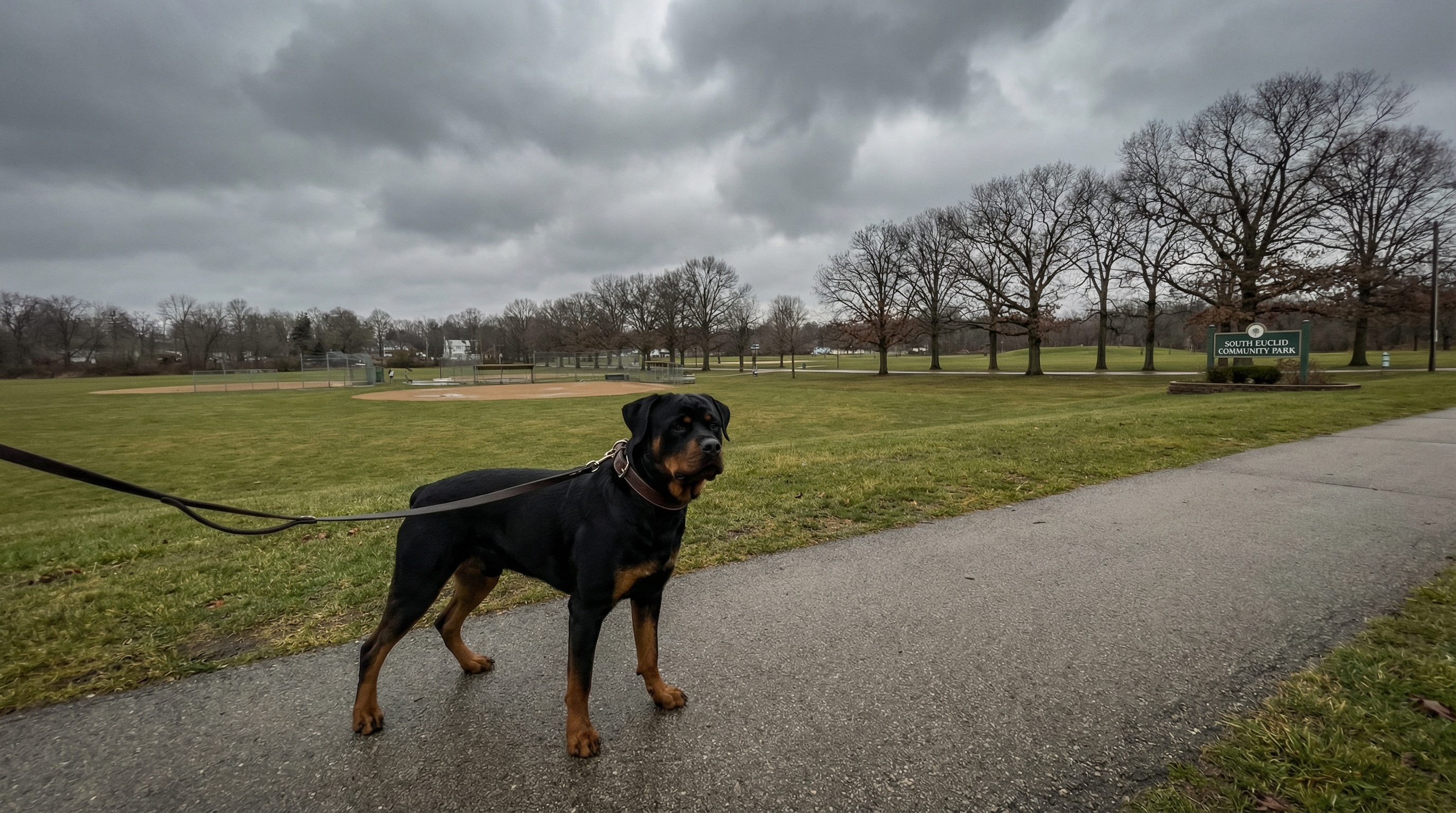
Ohio's New Dog Bite Law: What South Euclid Victims Need to Know
Ohio's new Avery's Law took effect in March 2026, bringing strict new insurance and liability rules for dangerous dogs in South Euclid.
Read article →
Avery's Law Is Now in Effect: What Ohio's New Dog Attack Law Means for Cuyahoga County Victims
Ohio's most significant overhaul of dangerous dog law in decades takes effect March 18, 2026. Here is what Avery's Law changes, what it does not change, and what it means if you or someone you love is attacked by a dog in Cuyahoga County.
Read article →About This Resource
This site provides educational analysis of Ohio dog bite law under R.C. § 955.28 for residents of South Euclid and Cuyahoga County. It is not a law firm and does not provide legal advice.
For legal representation, this resource is operated in association with Ryan Injury Attorneys, a personal injury law firm licensed in Ohio.